


Life is busy — we get it!
At St. Anthony Regional Hospital, we want to make health care decisions a little less stressful, including scheduling annual screenings for the early detection of breast cancer. In recognition of Breast Cancer Awareness Month in October, we’ve compiled a list of steps to help patients better understand the process, from detection to treatment.
Step 1: Start With A Mammogram
Early detection of breast cancer is critical to a positive outcome. In fact, when found in its earliest localized stages, the five-year survival rate is 99%. Early detection starts with a mammogram.
“According to the American Cancer Society, women ages 40 and older should have annual mammograms,” says Madison Haberl, R.T.(R), director of imaging services for St. Anthony.
Patients can schedule their annual mammogram at St. Anthony through their doctor, by visiting our radiology page or by calling 712-792-5202.
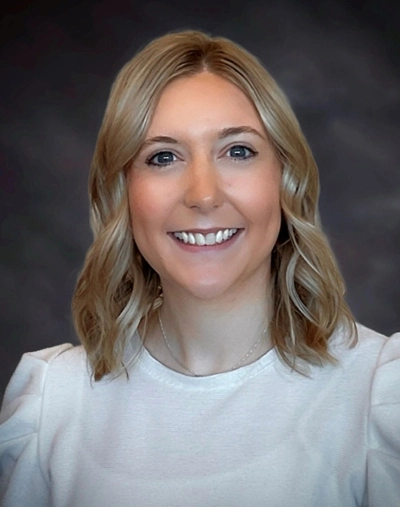
Madison Haberl, R.T.(R), director of imaging services for St. Anthony
Step 2: Discuss Results With Your Provider
Following the initial exam, you should get your results in a few days to a week, depending on your provider. From there, they typically give you the all clear and recommend another mammogram in a year, or they’ll walk you through next steps if results are inconclusive or abnormal.
“If an initial exam is inconclusive, your doctor may recommend an additional mammogram, a breast MRI or ultrasound to evaluate size, location and potential abnormalities within the breast,” says Haberl. “For women with very dense breast tissue and a family history of breast cancer, it is considered best practice to alternate mammograms and breast MRIs every six months.”
If a follow-up appointment is necessary, patients can also get their breast MRI or ultrasounds done at St. Anthony.
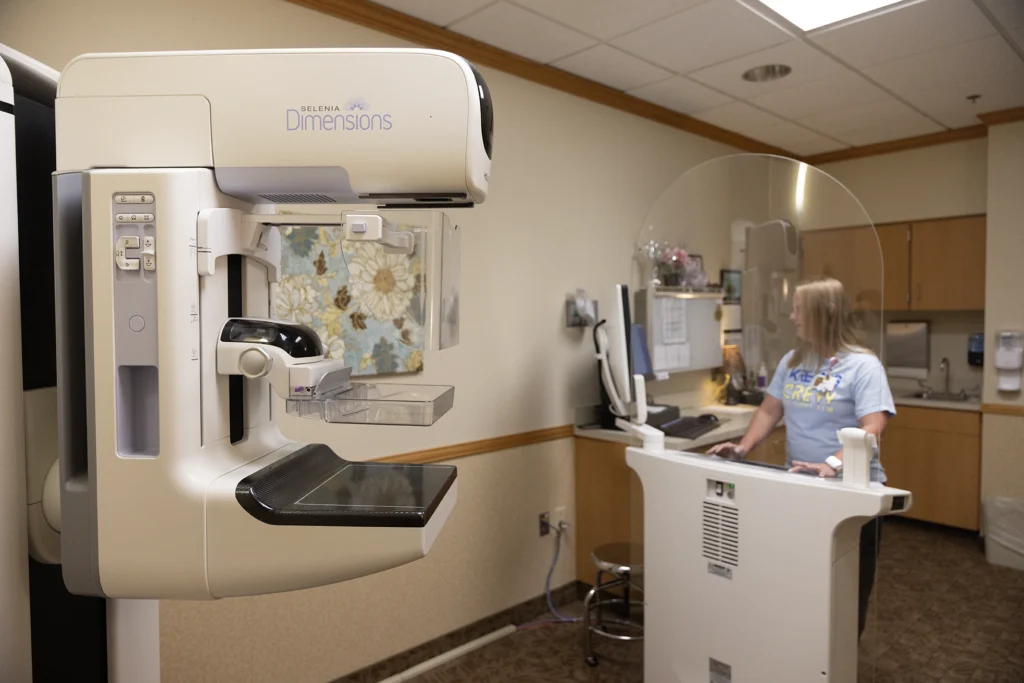
Step 3: A Diagnostic Look At The Area Of Concern
If a follow-up is required during Step 2, your provider may request additional views, which may include mammograms, ultrasounds or an MRI. All techniques are used to examine abnormalities. An MRI provides high-resolution imaging and is better equipped to identify small masses, including in dense breast tissue. Ultrasounds are less invasive and can often detect certain abnormalities before an MRI is necessary. They may also need additional mammogram views to take a closer look at spots.
“At St. Anthony, we also perform breast ultrasounds,” notes Haberl. “Ultrasounds can help distinguish between solid masses and fluid-filled cysts.”
While cysts are typically benign, solid masses may be cancerous, so an ultrasound can provide a precise measurement of the mass and help determine the cancer’s clinical stage, if present.
Results from diagnostic exams like mammograms and breast ultrasounds can sometimes be provided on the spot if the radiologist is present, or within a few days, helping determine next steps.
Step 4: Trust In The St. Anthony Team
This month, we’re offering mammograms five days a week, with extended hours Wednesdays until 6 p.m. Talk to your doctor about getting your screening at St. Anthony or call us directly at 712-792-5202.
Ready to schedule your annual breast cancer screening?
This month, we’re offering mammograms five days a week, with extended hours Wednesdays until 6 p.m. Talk to your doctor about getting your screening at St. Anthony or call us directly at 712-792-5202.